
The Dakar Rally (or simply “The Dakar“; formerly known as the “Paris–Dakar Rally“) is an annual rally raid organised by the Amaury Sport Organisation. Most events since the inception in 1978 were staged from Paris, France, to Dakar, Senegal, but due to security threats in Mauritania, which led to the cancellation of the 2008 rally, events from 2009 to 2019 were held in South America.[1][2][3] The 2020 edition is being held in Saudi Arabia. The rally is open to amateur and professional entries, amateurs typically making up about eighty percent of the partiThe rally is an off-road endurance event. The terrain that the competitors traverse is much tougher than that used in conventional rallying, and the vehicles used are true off-road vehicles rather than modified on-road vehicles. Most of the competitive special sections are off-road, crossing dunes, mud, camel grass, rocks, and erg among others. The distances of each stage covered vary from short distances up to 800–900 kilometres (500–560 mi) per day.cipants.
: Vehicle and Classes
The five competitive groups in the Dakar are the motorcycles, quads, the cars class (which ranges from buggies to small SUVs), UTVs, and the trucksclass. Many vehicle manufacturers use the rally’s harsh environment as both a testing ground and an opportunity to show off their vehicles’ durability—though, in fact, most vehicles are heavily modified or purpose-built.
; MotorBikes
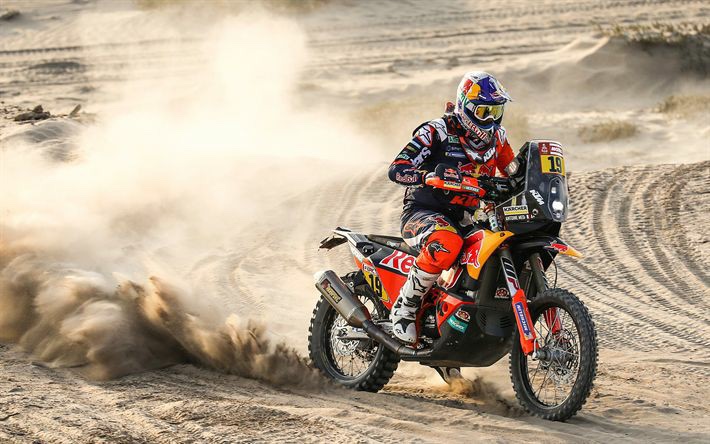
Rally Dakar 2016
As of 2011, the engine capacity limit for all motorbikes competing in the Dakar Rally is 450cc. Engines may be either single or twin cylinder. Riders are divided into two groups, “Elite” (Group 1) and Non-Elite (Group 2), with the latter subdivided into two further groups – the “Super Production” (Group 2.1) and “Marathon” (Group 2.2) classes. “Marathon” competitors are not permitted to change such key components as the engine (including the engine case, cylinders and cylinder heads), the frame, the forks or swinging arm, whereas those in the “Super Production” and “Elite” classes may replace these components.[15]
A subcategory for both motorbikes and quads is the “Original by Motul” (formerly called Malle Moto due to only one trunk of luggage allowed). [16] Since these competitors are not allowed any support persons, the rider has to service everything self. It is often called the toughest of the tough, and one for the Dakar purists.[17]
KTM has dominated the motorcycle class in recent years, although Honda, Yamaha, Sherco, Husqvarna, and Gas Gas also compete currently. BMW and Cagiva have also enjoyed success in the past.
; Quad Bikes
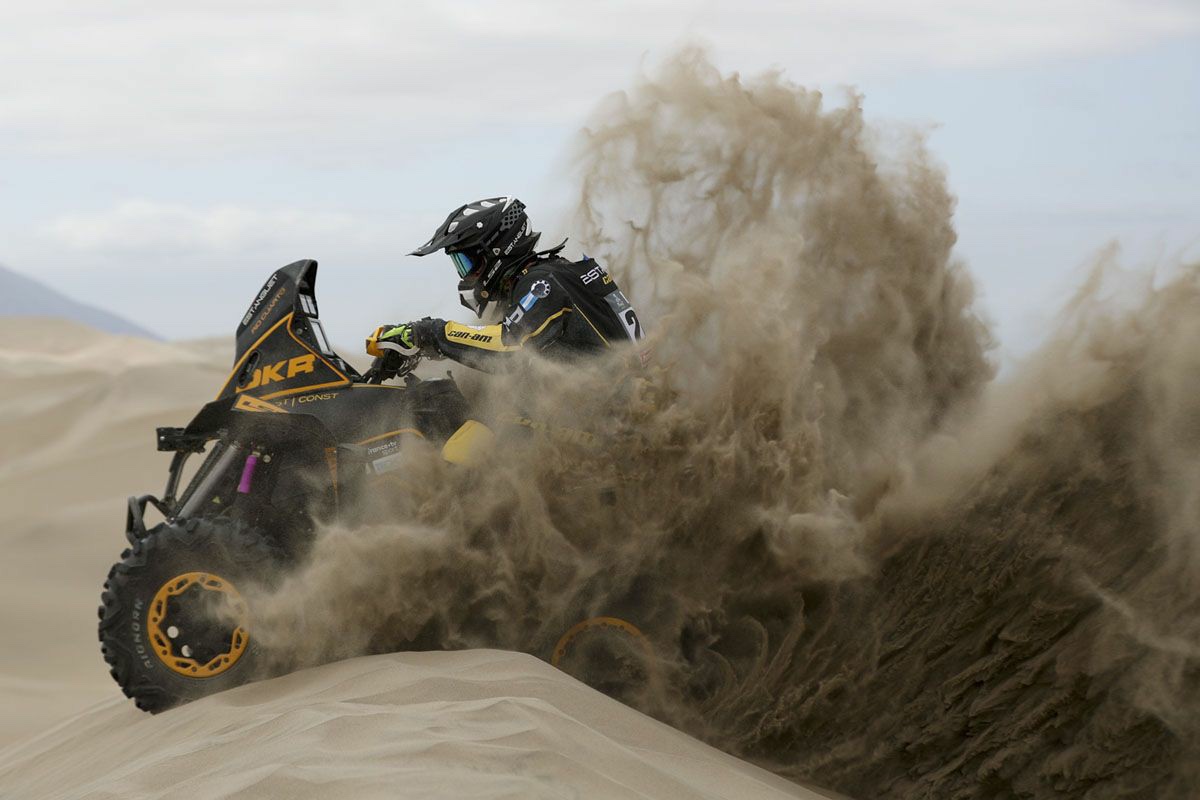
Prior to 2009, Quads were a subdivision of the motorbike category, but they were granted their own separate classification in 2009 and are designated Group 3 in the current regulations. They are divided into two subgroups – Group 3.1, which features two-wheel drive quads with a single cylinder engine with a maximum capacity of 750cc, and Group 3.2, which permits four-wheel drive quads with a maximum engine capacity of 900cc, in either single or twin cylinder layout.[15]
Yamaha are unbeaten in the Quad category since 2009, with their main current opposition coming courtesy of Honda and Can-Am.
; Cars
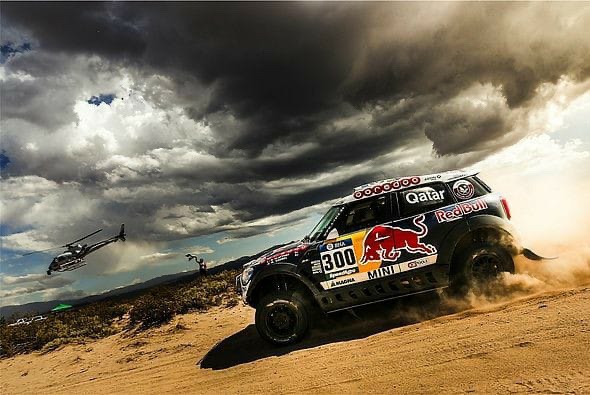
Stéphane Peterhansel and Jean-Paul Cottret in an X-raid Mini ALL4 Racing during Rally Dakar 2013
The car class is made up of vehicles weighing less than 3,500 kg (7,716 lb), which are subdivided into several categories. The T1 Group is made up of “Improved Cross-Country Vehicles”, subdivided according to engine type (petrol or diesel) and drive type (two-wheel or four-wheel drive). The T2 Group is made up of “Cross-Country Series Production Vehicles”, which are subdivided into petrol and diesel categories, while the T3 Group is for “Light Vehicles”. There is also an “Open” category catering for vehicles conforming to SCORE regulations.[18]
Mini have been the most successful marque in the car category in recent years, thanks to the efforts of the non-factory X-raid team, with limited involvement currently coming from Toyota, Ford and Haval. Several constructors also produce bespoke buggies for the event, most notably SMG and Damen Jefferies.
Mitsubishi is historically the most successful manufacturer in the car class, with Volkswagen, Citroen, Peugeot and Porsche having all tasted success in the past with factory teams. Jean-Louis Schlesser has also won the event twice with his Renault-supported buggies. Factory teams from Nissan and SEAT have also won stages, as has BMW, courtesy of the X-raid team.
; Trucks
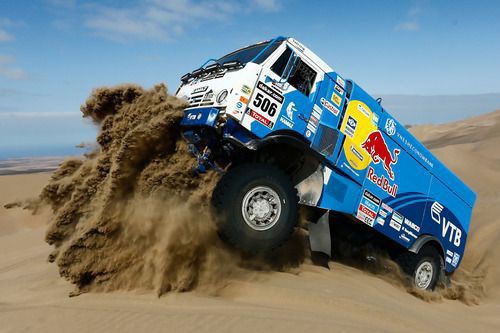
The Truck class (Group T4), first run as a separate category in 1980, is made up of vehicles weighing more than 3,500 kg (7,716 lb). Trucks participating in the competition are subdivided into “Series Production” trucks (T4.1) and “Modified” trucks (T4.2), whilst Group T4.3 (formerly known as T5) trucks are rally support trucks – meaning they travel from bivouac to bivouac to support the competition vehicles.[18] These were introduced to the rally in 1998. The truck event was not run in 1989 after it was decided the vehicles, by this stage with twin engines generating in excess of 1000 horsepower, were too dangerous following the death of a DAFcrew member in an accident during the 1988 rally.[5]
Kamaz has dominated the truck category since the turn of the century, although it has come under increasing pressure from rivals such as Iveco, MAN, Renault, and Tatra, which enjoyed much success in the 1990s. Hino, DAF, Perlini, and Mercedes-Benzhave also been among the winners in the past. In the 21st century Kamaz almost always won the truck class, winning fourteen out of eighteen times.
; UTV
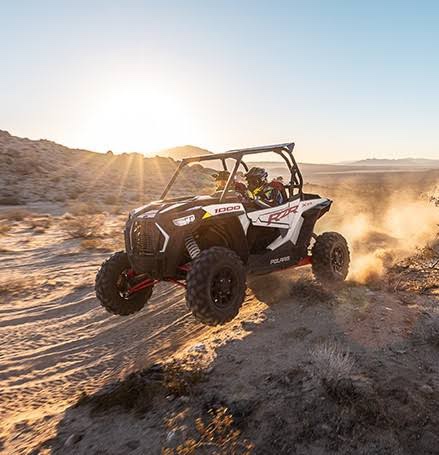
The UTVs class was introduced in 2017. Previously run under the car category as the T3 class, Side by Side (UTV) vehicles are now run under their own class in Dakar competition.
 Dakar Rally
Nice ra rey
LikeLiked by 1 person
☠️46☠️
LikeLiked by 1 person
🚲
LikeLiked by 1 person
Grt work
LikeLiked by 1 person
Tq 30
LikeLike